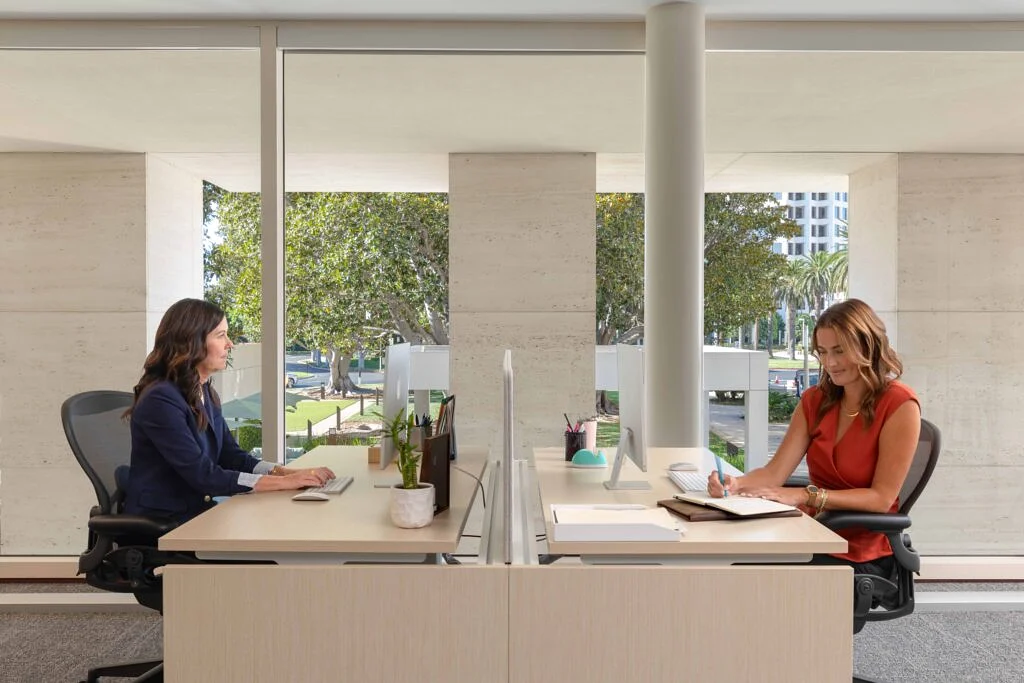
In today’s high-stakes business climate, speed isn’t a luxury; it’s the difference between growth and stagnation. For small and midsize businesses (SMBs), where every delay burns cash and erodes opportunity, traditional office leasing models don’t align with the pace of modern SMB business. Securing a workspace should be an accelerator, not a bottleneck.
Yet, historically, it’s been the opposite. Fifteen years ago, leasing an office could mean a six-to-nine-month timeline, an exhausting sequence of site tours, legal negotiations, space planning, buildouts and vendor coordination. In a slower economy, that might have been acceptable. In today’s environment of compressed product cycles, distributed teams and ever-present financial volatility, it’s increasingly untenable.
For SMBs, time isn’t just money—it’s survival.
The Cost of Delay
Cash flow remains the leading cause of small business failure in the U.S., according to the Small Business Administration. It’s not just a financial metric; it’s a countdown clock. Every delay in getting to market, securing clients, or operationalizing a space eats directly into that limited runway. Speed isn’t just about efficiency; for many SMBs, it’s about staying alive long enough to grow.

While long-term leases may suit some business models, many growing SMBs benefit from more adaptive solutions. A one-year lease with the option to scale up allows companies to match their space with their trajectory, expanding when it makes sense, not because they’re locked in. Flexibility isn’t a departure from commitment—it’s a smart hedge against uncertainty and an opportunity to align space strategy with business velocity.
Velocity as a Strategic Asset
Velocity in this context doesn’t mean rushing. It means reducing friction across every layer of the business, product, people, process, and place, so that teams can move with clarity and purpose.
According to Deloitte’s 2025 Human Capital Trends report, 84% of executives believe agility is essential to performance, yet only 24% feel equipped to adapt quickly to disruption. That gap highlights an operational blind spot: most systems were built for scale, not for speed. But in a time of rapid change and evolving expectations, responsiveness has become a core differentiator.
Office space should reflect that. It shouldn’t be a lagging decision that follows business growth; it should be a tool that enables it.
Rethinking the Leasing Journey
Leasing at the pace of innovation means removing the traditional roadblock that slows business momentum. Irvine Company’s Flex+ product reengineers the leasing journey to better meet the real needs of SMBs. With pre-built suites, furnished options, simplified legal documents, and concierge-like onboarding, companies can go from tour to move-in in as little as one week. It’s not just leasing—it’s growth activation. This kind of model reflects the reality that startups, growth-stage firms, and increasingly agile enterprises are no longer looking for “office space.” They’re looking for readiness.
Redefining Workplace ROI
The COVID-19 pandemic reframed the role of the office. It’s no longer just a physical location; it’s a strategic asset. One that must justify its cost through the experience it creates.
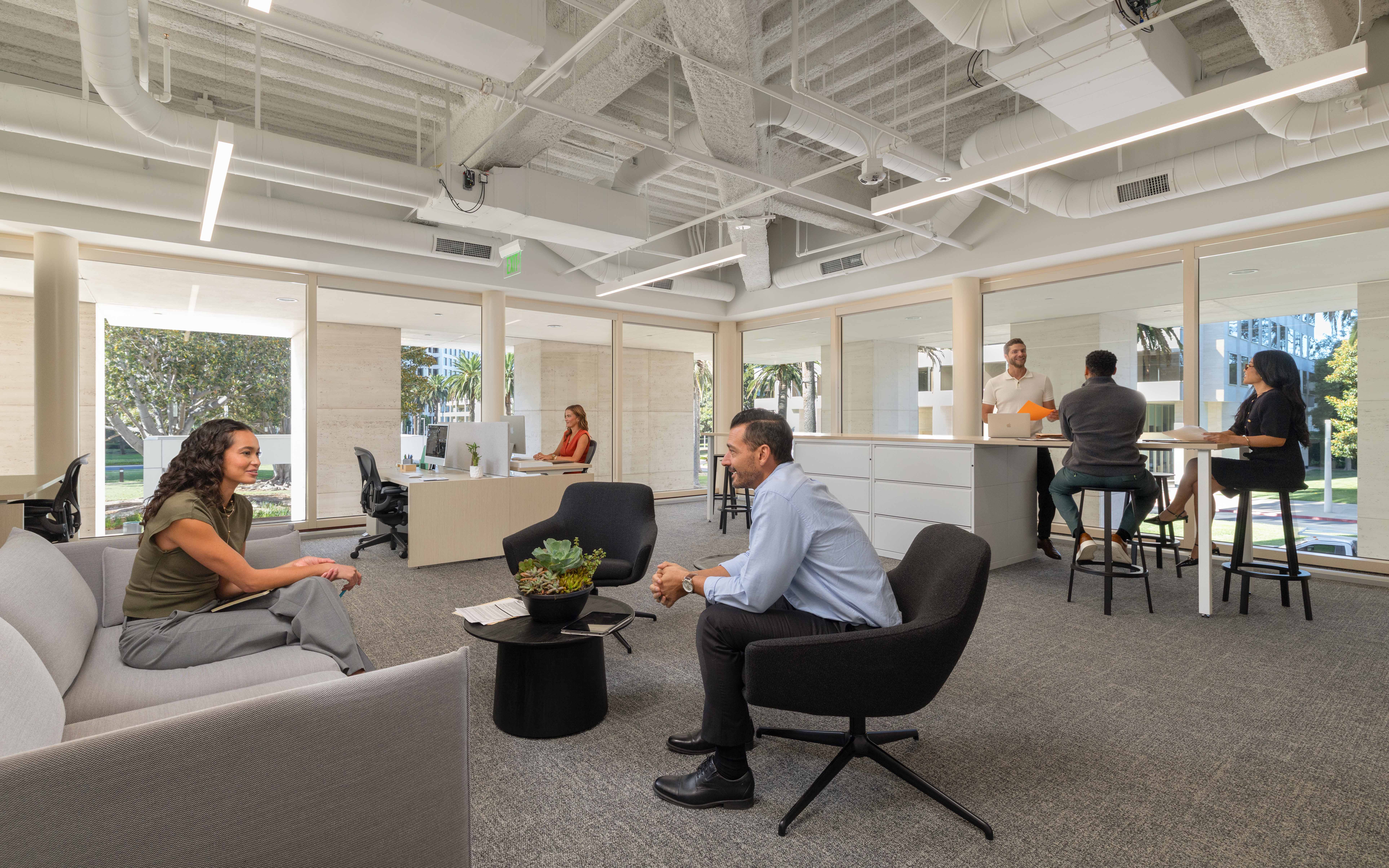
Data from Gensler’s U.S. Workplace Survey shows that employees in high-performance environments report 2x the innovation and 6x the engagement compared to those in average settings. That’s a meaningful delta for companies trying to attract talent, strengthen culture, or accelerate execution.
But there’s another layer to ROI: opportunity cost. What growth initiatives are delayed because a team isn’t co-located? What client conversations are missed because the company isn’t operational? What hiring opportunities slip by because the workplace isn’t ready?
These questions aren’t theoretical. For fast-moving SMBs, the answers can define a quarter or a year of operational investment.
The Risk of Rigidity
One of the most cited fears among growing companies is committing to the wrong amount of space. Too much, and they burn cash. Too little, and they’re moving again within six months. That’s why flexibility isn’t just a preference; it’s a risk-management tool. It allows SMBs to respond to uncertainty with options instead of obligations. To adjust as needs evolve.
More broadly, flexibility supports the iterative nature of modern business. SMB companies don’t operate on five-year cycles anymore. They operate on six-month sprints. Office space should mirror that rhythm, not resist it.
A New Set of Questions
As businesses evaluate their space strategies, the questions they ask are changing. Instead of “What’s the cost per square foot?” They should be asking:
- How fast can we be operational?
- Is this space flexible enough to scale with us?
- Does it support hybrid collaboration?
- Will it attract the talent we need?
- Can we avoid upfront capital costs?
- How fast can we adapt if the market shifts?
These are not small adjustments. They signal a larger evolution—from viewing space as a fixed expense to seeing it as a lever for growth, culture, and performance.
Final Thought: Design for Agility
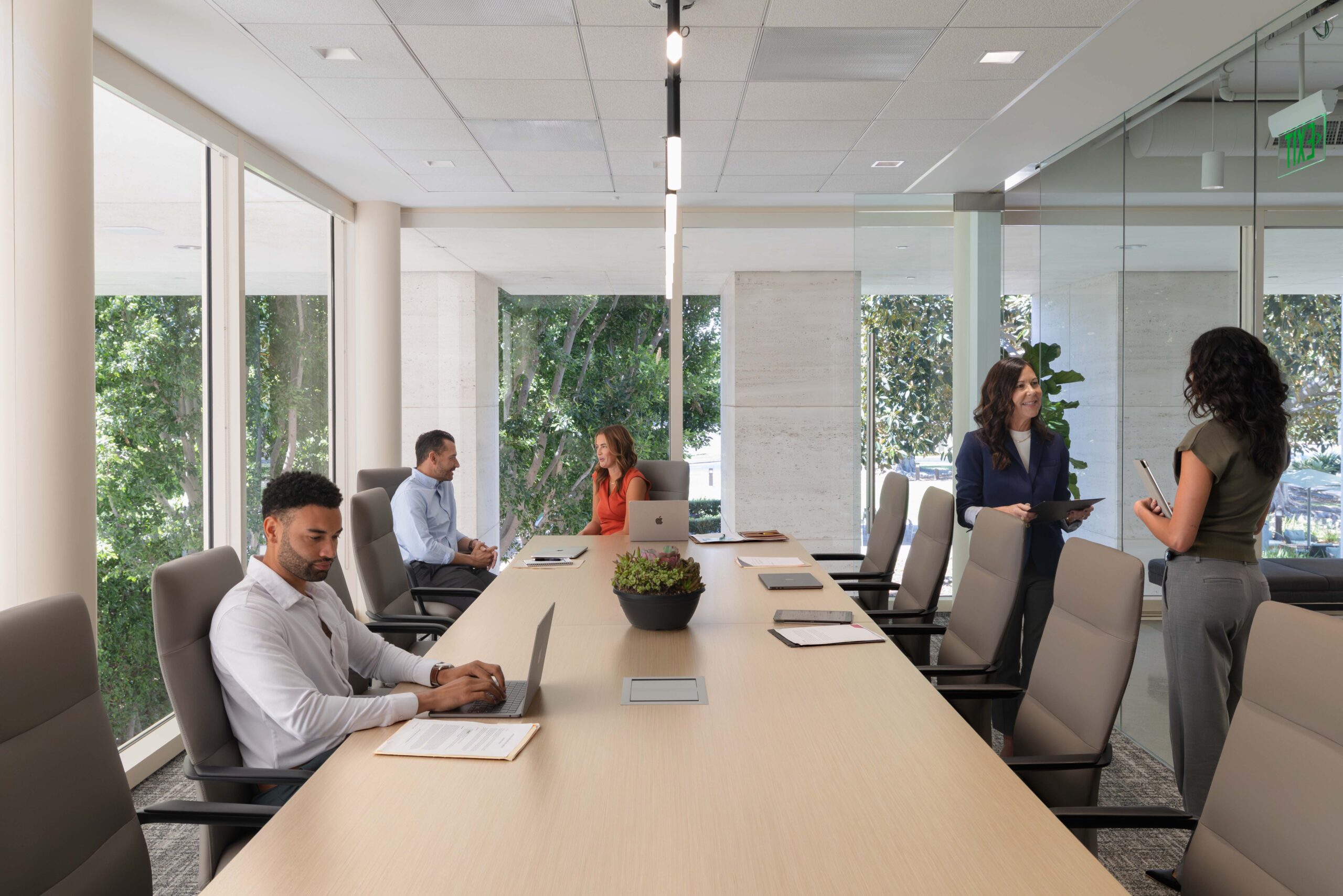
In 2025, growing SMBs are operating in an environment that demands agility, flexibility, and constant recalibration. They’re navigating shifting market conditions, adapting to hybrid work realities, and rapidly integrating new technologies. In this landscape, success isn’t defined by size or legacy; it’s determined by the ability to move decisively, adjust quickly, and align resources to opportunity with speed and clarity.
That’s why rethinking office leasing isn’t a facilities issue. It’s a business strategy. Speed, when thoughtfully applied, creates advantage. It enables focus. It unlocks capacity. It turns vision into action—faster. And in today’s world, that’s not just a nice-to-have. It’s the strategy.
Kelly Micco is a real estate executive and a key leader behind the strategy and growth of Flex+ at Irvine Company Office Properties. As Vice President of Flex+, he shapes the vision, offerings, and customer experience of Irvine Company’s flexible workspace platform, ensuring it meets the fast-evolving needs of small and mid-sized businesses.
Kelly drives product strategy, market positioning, and portfolio performance for Flex+, helping SMBs access high-quality, move-in-ready office solutions that support speed-to-market, operational ease, and scalable growth. His earlier roles at Irvine Company, including Senior Director of Flex+ and Director of Finance and Investments, further strengthened his expertise in financial strategy, investment analysis, and portfolio optimization. Known for his strategic clarity and operational discipline, Kelly plays a central role in shaping the future of Flex+ as a trusted, modern workspace solution for the SMB community.